
Overview
The Cards Market Taking Game turns the classic card expected value interview question into a live trading exercise. Each round deals three cards face down, and the game quotes a market for the sum of their face values, which is not always the fair value. You work out the expected sum, decide whether the quote is too high or too low, and buy or sell accordingly. The cards flash face up for a few seconds before hiding again, so you compute your real profit or loss from memory. You start with 500 points and, because cards are not replaced between rounds, the expected value keeps shifting as the deck depletes. Number ranks are worth their face value, with the King at 13 and the Ace at 14 or 1 depending on your settings.
Example: taking the right side
Three cards go face down and the market maker quotes you a two-sided market on their total. You work out the expected sum, pick a size, and hit whichever side is wrong. The cards then flash up briefly and turn back over, and you have to work out your own profit or loss from memory.
Example animation
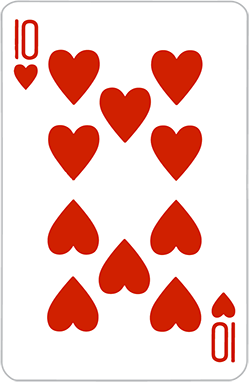
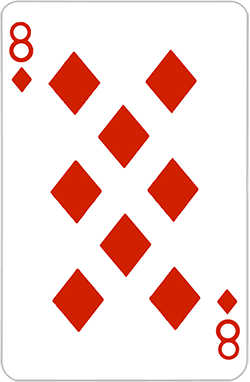
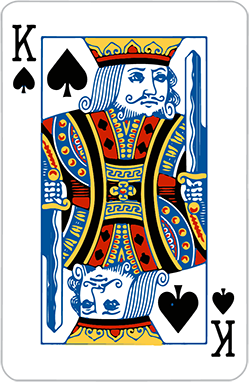
The market maker quotes 24 at 28.
Shares
1
5
10
Shares (integer)5
Buy
Sell
No Trade
What is your profit or loss?
Write a minus (-) sign before the number in case of a loss.
15
Submit
Cards run 1 to 13 (or 2 to 14, depending on your setting for the ace), so three of them are worth 21 (or 24) on average. A bid of 24 (or 27) is well above that, which makes you buy the offer.
This is a looping illustration of the game screen, not the live game.
Play Free Example
Game Phases
1
Read the market
Each round the game deals three cards face down and quotes a market for the sum of their values. That quote is not always fair, so it is on you to price the true expected sum.
2
Buy or sell
Compare your expected sum to the quote. Buy if you think the real sum is higher, sell if you think it is lower, and choose how many shares to trade to size your conviction.
3
Watch the reveal
The cards flash face up for a customizable few seconds, then turn back over. Remember them, because you will need the exact values next.
4
Settle your P&L
Compute your actual profit or loss from the revealed cards and submit it. Cards are not replaced, so track how the remaining deck shifts the odds each round.
Scoring
+P
Correct profit
When you correctly identify a profit, it is added to your total points.
L
Correct loss
When you correctly identify a loss, it is subtracted from your total, exactly like the real position.
0
Incorrect profit
Misjudging a profit changes nothing; you simply miss the gain you could have booked.
2L
Incorrect loss
Getting a loss wrong is punished: double the loss is subtracted from your total, so precision matters most when you are behind.
EV
Expected value math
Every decision rewards accurate expected value math over the depleting deck; the closer your estimate, the better you trade.
You start with 500 points and your final score is what remains after all rounds. Correct calls bank the profit or loss exactly, while an incorrect loss costs double, so precise expected value math beats guessing. Playing with the EV hint on, or with custom settings, does not record to the leaderboard, which is grouped by difficulty.
Top scores
| Rank | Username | Score | Date | Difficulty |
|---|
Your progress
📊 Track your progress
See your scores over time and watch yourself improve.
Start Your Preparation
Already have an account? Log in
More Practice
Company Assessments
Math Tests
Market Making Games
Market of Cards - Group Game
Probability Betting Game
Fruit Market Making Game
Free
Make Me a Market - Facts & Guesstimates
Example
Dice and Cards Game
Basketball Game
ETF Challenge
Next Card Betting
Fermi Questions
The Marble Olympics
ETF Market Making Drills
Options Market Making Drills
Futures & Basis Drills
Prediction Market Drills